A More Sustainable Way to Play
Green Hockey develops skating surfaces and equipment that reduce operational resource requirements while increasing the use of recycled materials across the game.

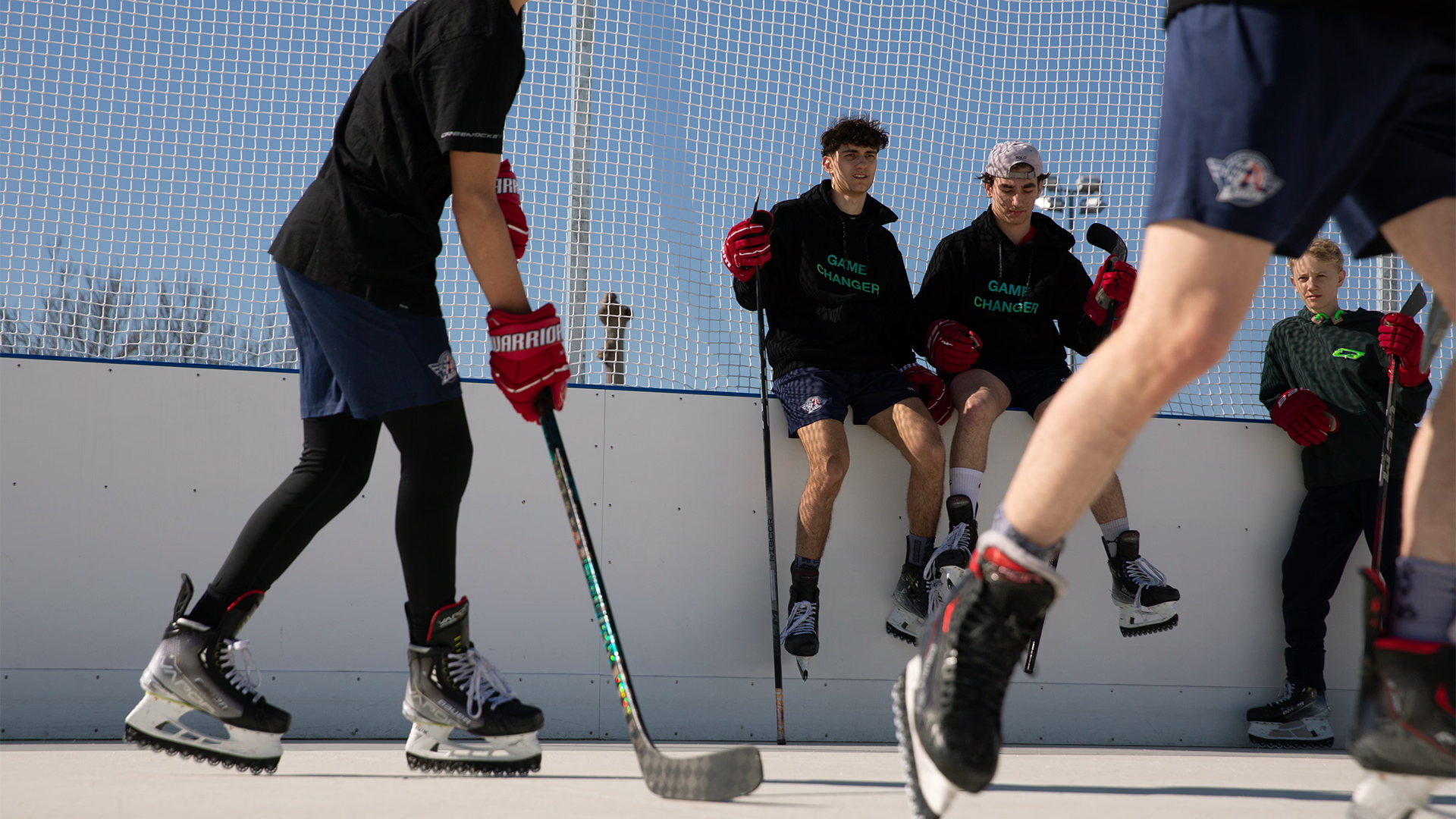
Less Energy. Less Water. More Ice Time.
The following comparison focuses on the operation of the skating surface itself. It does not include the building, lighting, boards, transportation, installation or other venue infrastructure.
Energy Consumption
CO2 Emissions
Water Consumption
Refrigeration
Availability
From OCEANICE to Crystal Green
OCEANICE was developed to make hockey accessible beyond conventional ice infrastructure while giving recycled plastic a new purpose. Crystal Green builds on that foundation as the next generation of Green Hockey synthetic ice.
The development path is focused on better material choices, practical performance and products that can be used across a wider range of facilities, climates and community settings.
The first major step in Green Hockey recycled synthetic ice surfaces.
The surface behind Mission 26 and the next development step after OCEANICE.
From 50% to 80-100%
Mission 26 is Green Hockey's commitment to increase the share of recycled ocean-bound plastic in Crystal Green from 50% today to 80-100% by the end of 2026.
At that target, every full-size rink will contain approximately 21-26 US short tons of recycled material. According to Green Hockey's current comparison model, each rink can also save up to 331 US short tons of CO2 and up to 264,000 US gallons of water per year compared with conventional refrigerated ice operation.
Mission 26 is the development roadmap behind Crystal Green, not a separate campaign.
Mission 26 in Numbers
Full-size rink reference: approximately 19,400 sq ft (1,800 m2).
A New Purpose for Existing Materials
The GREENLY Puck is made largely from recycled ski-boot material, giving an existing resource a new purpose in a product developed specifically for synthetic ice.
Together with OCEANICE and Crystal Green, it shows how different parts of the game can be reconsidered through smarter material choices.
Key Facts
Simpler Use. Responsible Maintenance.
OCEANICE and Crystal Green remain ready for play with regular cleaning, without the technical systems required to create, freeze and repeatedly restore an ice layer.
Every skating surface experiences wear during use, including conventional and synthetic ice. Abrasion from Green Hockey's synthetic ice surfaces remains primarily on the surface, where it can be collected as part of regular maintenance.
For installations with drainage, wet cleaning or specific environmental requirements, additional filtration solutions can be integrated to help retain particles before they enter the wastewater system.
Progress, Not Perfection
Every manufactured product has an environmental footprint. We do not claim otherwise.
Our focus is to reduce the resources required during use, increase the share of recycled materials and continuously improve the products behind the game.
Mission 26 gives this development a clear and measurable direction.
More Places to Play. Fewer Operational Resources.
By rethinking skating surfaces, equipment and material use, Green Hockey is creating more opportunities to play while working to reduce the resources required by the game.
Anywhere. Anytime. All year round.